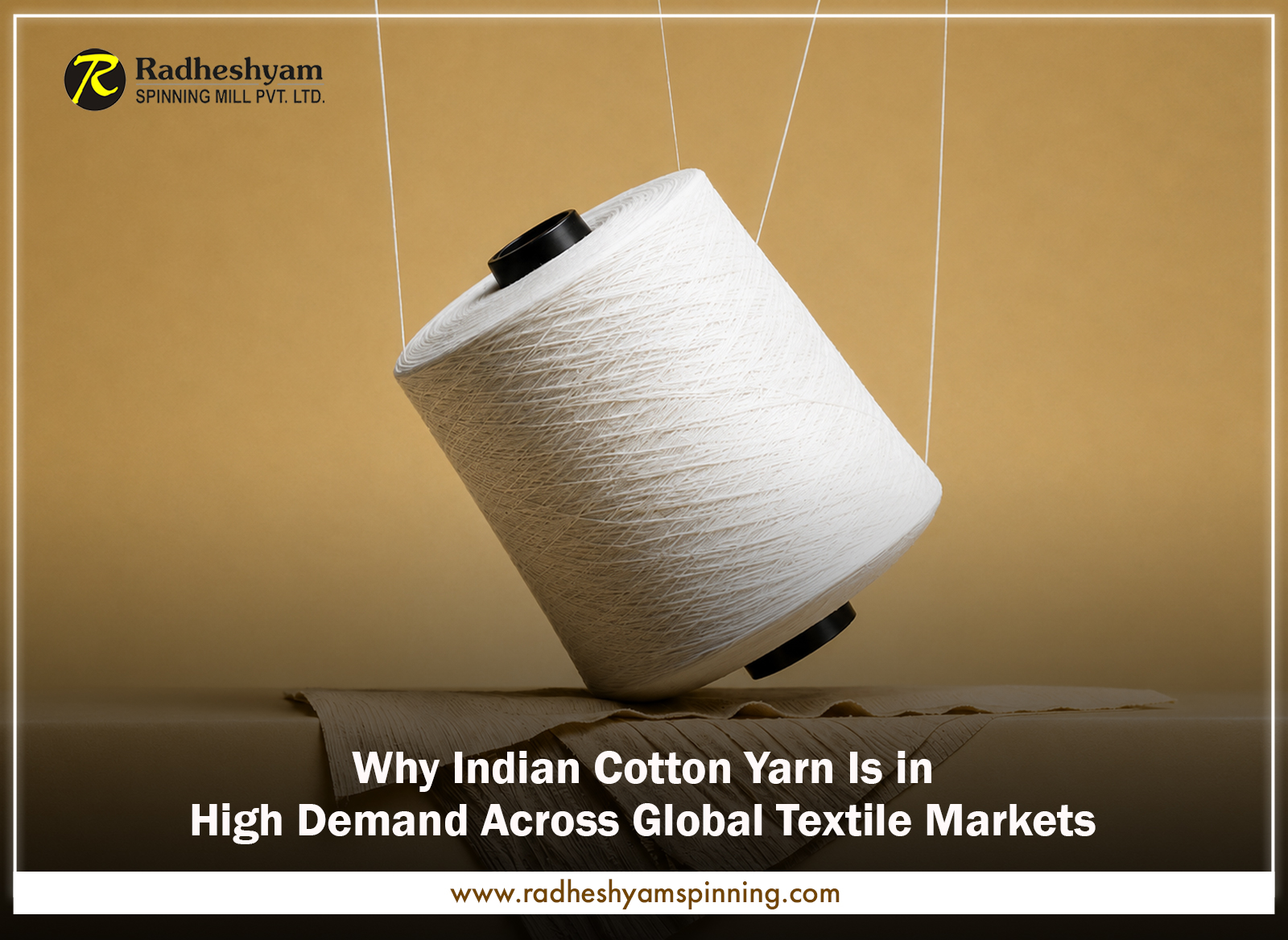
The global textile industry is changing quickly. Buyers today want yarn that offers quality, consistency, comfort, durability, and responsible value. In this shift, Indian cotton yarn has earned a strong position across international textile markets. From apparel and denim to hosiery, knitwear, towels, and home textiles, manufacturers around the world continue to prefer Indian cotton yarn for its dependable performance and cost advantage.
At Radheshyam Spinning Mill Pvt. Ltd., we have witnessed this demand closely. Since 2011, we have been catering to both domestic and international markets with a clear focus on quality, timely delivery, and customer satisfaction. As a trusted cotton yarn manufacturer and exporter from India, we understand why Indian cotton yarn continues to attract global buyers.
1. India’s Strong Cotton Base
India is one of the world’s leading cotton-producing countries, which gives Indian spinning mills a strong raw material advantage. A wide cotton-growing belt, experienced farmers, and an established textile ecosystem make India a reliable source for cotton-based products.
This availability helps yarn manufacturers maintain steady production and serve large as well as customized orders. For international buyers, this is a major benefit because stable supply plays an important role in textile planning, especially for bulk garment and fabric production.
2. Quality That Matches Global Requirements
Global textile buyers do not look only for yarn; they look for performance. Yarn must support smooth weaving or knitting, reduce breakage, maintain strength, and deliver uniform output in the final fabric.
Indian cotton yarn is valued because it can meet different technical requirements across industries. Whether it is used for denim, hosiery, knitwear, terry towels, or home textiles, the right yarn quality directly improves fabric appearance, comfort, and durability.
At Radheshyam Spinning Mill, quality control is part of every stage of production. Our focus is to supply yarn that offers consistency, strength, and reliable performance for our customers across different markets.
3. Competitive Pricing Without Compromising Value
One of the biggest reasons behind the global demand for Indian cotton yarn is its balance of quality and affordability. Textile manufacturers worldwide operate in competitive markets where cost control is important. Indian yarn suppliers are able to offer strong value because of India’s raw cotton availability, skilled workforce, and developed spinning infrastructure.
For buyers, this means they can source high-quality cotton yarn at competitive prices without compromising on production standards. This value-driven advantage makes Indian cotton yarn a preferred choice for many international manufacturers.
4. Versatility Across Textile Applications
Cotton yarn from India is used in a wide range of textile products. Its softness, breathability, absorbency, and natural feel make it suitable for everyday clothing as well as specialized fabric categories.
Indian cotton yarn is commonly used in:
- Denim fabrics
- Knitwear
- Hosiery products
- Terry towels
- Home textiles
- Apparel fabrics
- Industrial textile applications
This versatility gives global buyers the flexibility to source yarn for multiple product lines from one dependable market.
5. Growing Preference for Natural Fibres
Consumers across the world are becoming more conscious about what they wear and use. Natural fibres like cotton are preferred because they are breathable, comfortable, skin-friendly, and suitable for different climates.
As fashion and home textile brands respond to this consumer preference, the demand for cotton-based yarn continues to grow. Indian cotton yarn benefits from this trend because it supports both comfort-focused and quality-focused textile production.
6. Strong Export Experience and Global Reach
India has a long history in textiles, and its spinning industry is connected with buyers across Asia, Europe, the Middle East, and other regions. This export experience makes Indian suppliers familiar with international expectations related to packaging, documentation, delivery schedules, and quality standards.
Radheshyam Spinning Mill has built long-term trust by supplying cotton yarn to domestic and international customers. Our export presence includes markets such as the USA, Malaysia, Indonesia, China, Bangladesh, Dubai, Portugal, Italy, and Macedonia. This global reach reflects our ability to understand different buyer needs and deliver accordingly.
7. Reliability and Timely Delivery
In the textile business, delays can affect the entire production cycle. Fabric mills, garment manufacturers, and exporters depend on timely yarn supply to meet their own commitments.
This is why reliability is one of the strongest reasons buyers continue to choose Indian cotton yarn suppliers. At Radheshyam Spinning Mill, transparency and timely delivery are part of our core values. We believe that quality yarn must be supported by professional service, clear communication, and dependable dispatch planning.
8. Experience Backed by Industry Knowledge
The cotton yarn business requires more than machines. It requires understanding cotton behaviour, market needs, production processes, and buyer expectations. With promoters carrying decades of experience in the cotton industry, Radheshyam Spinning Mill combines practical knowledge with modern production focus.
This experience helps us maintain consistency, adapt to market changes, and serve customers with confidence.
Conclusion
Indian cotton yarn is in high demand because it offers the right combination of quality, availability, versatility, affordability, and global reliability. As textile markets continue to grow, buyers need yarn partners who can deliver consistent products and dependable service.
At Radheshyam Spinning Mill Pvt. Ltd., our mission is to build trust through quality cotton yarn, efficient service, and competitive pricing. We are proud to contribute to India’s strong position in the global cotton yarn market and continue serving textile manufacturers across the world with dedication and consistency.