24 Sep, 2026
Traditional
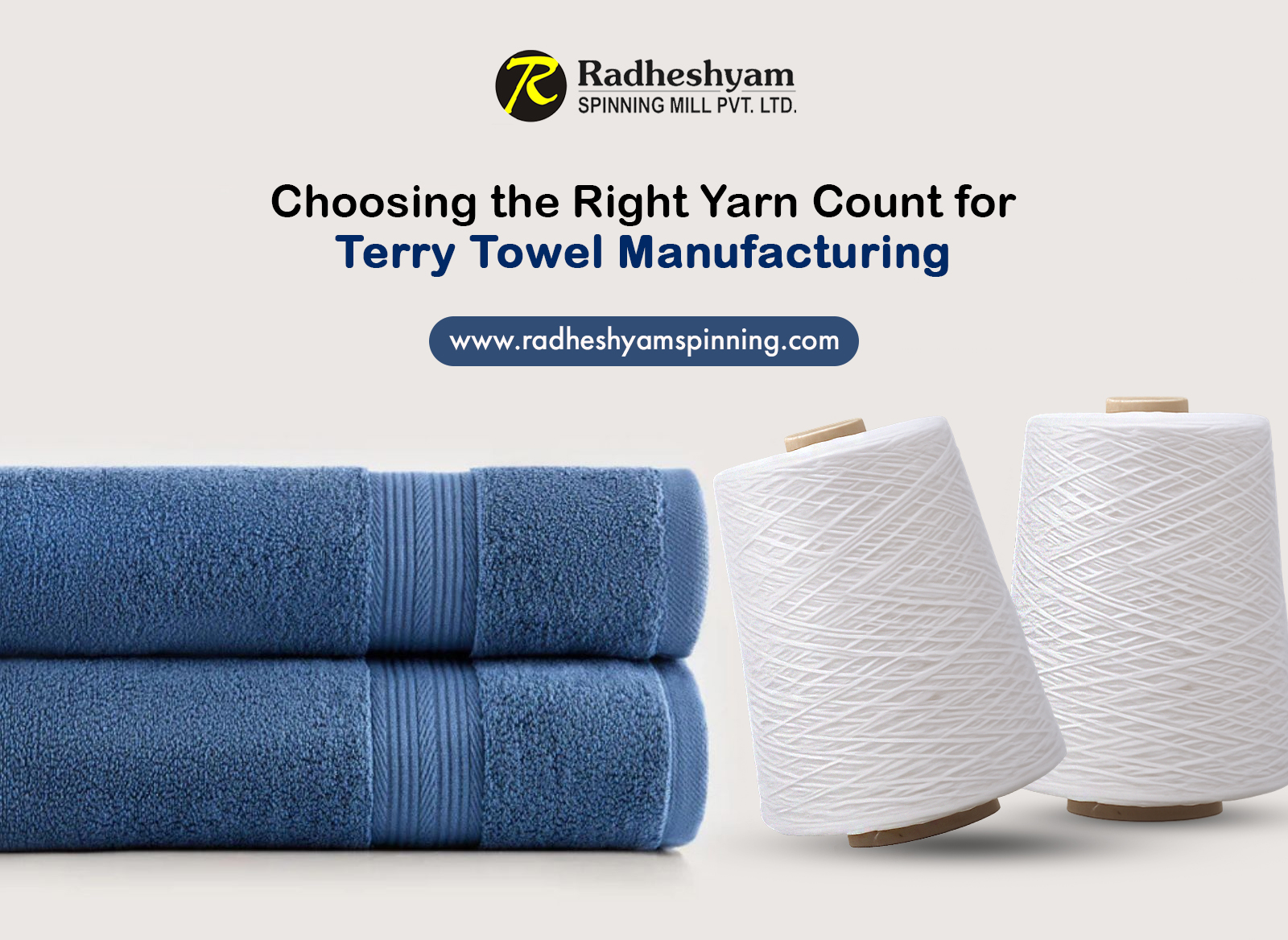
Choosing the Right Yarn Count for Terry Towel Manufacturing
By: Radheshyam Spinning | 24 Aug, 2026
When it comes to manufacturing premium-quality terry towels, every detail matters—from the type of cotton used to the weaving process. However, one factor that has the greatest influence on a towel’s softness, absorbency, durability, and overall performance is yarn count. Selecting the right yarn count is essential for producing towels that meet customer expectations while maintaining manufacturing efficiency.
Whether you manufacture luxury bath towels, hotel towels, kitchen towels, or institutional textiles, understanding yarn count helps you achieve the perfect balance between comfort, strength, and cost. At Radheshyam Spinning Mill, high-quality cotton yarn is produced with precision to meet the diverse requirements of towel manufacturers in India and international markets.
What Is Yarn Count?
Yarn count refers to the thickness or fineness of the yarn. It determines how much yarn is required to produce a specific length or weight and directly affects the texture, absorbency, weight, and appearance of the finished towel.
In simple terms:
- Lower yarn count = Thicker and stronger yarn
- Higher yarn count = Finer and softer yarn
Choosing the appropriate yarn count depends on the intended use of the towel, desired fabric quality, and manufacturing process.
Role of Yarn Count in Terry Towel Manufacturing
Terry towels are designed to absorb moisture quickly while remaining soft and durable after repeated washing. The yarn count used in both the ground fabric and pile loops significantly impacts the towel’s overall performance.
Selecting the right yarn count helps manufacturers achieve:
- Superior water absorbency
- Soft and comfortable texture
- Long-lasting durability
- Better dimensional stability
- Improved fabric appearance
- Efficient production with minimal waste
Using an unsuitable yarn count can result in towels that feel rough, lose absorbency, or wear out faster.
Common Yarn Counts for Terry Towels
Different towel categories require different yarn specifications depending on their purpose.
Coarser Yarn Counts
Lower-count yarns are commonly used for:
- Hotel towels
- Institutional towels
- Industrial cleaning towels
- Heavy-duty bath towels
These yarns provide excellent strength, higher durability, and good moisture absorption, making them ideal for products subjected to frequent washing.
Medium Yarn Counts
Medium yarn counts are widely used for:
- Home bath towels
- Hand towels
- Face towels
- Kitchen towels
They offer an ideal balance between softness, absorbency, and durability, making them the preferred choice for everyday household textiles.
Finer Yarn Counts
Higher-count yarns are generally selected for:
- Luxury bath towels
- Premium spa towels
- Designer towel collections
- High-end hospitality textiles
These yarns create a smoother, softer surface while maintaining excellent comfort and an elegant appearance.
Things to Consider When Choosing Yarn Count
Choosing the correct yarn count requires evaluating several manufacturing and product requirements.
End Use of the Towel
The intended application is the first consideration. Luxury towels prioritize softness and appearance, while commercial towels require higher durability and consistent performance.
Absorbency Requirements
Absorbency is one of the most important characteristics of a terry towel. The right yarn count allows the pile loops to retain more water without compromising the towel’s structure.
GSM Requirements
The grams per square meter (GSM) of a towel determines its thickness and feel. Heavier towels generally require yarn combinations that provide sufficient bulk and strength while maintaining softness.
Weaving Performance
Properly selected yarn counts ensure smooth weaving operations, reduced yarn breakage, and consistent fabric quality. This improves production efficiency and minimizes downtime.
Cost Efficiency
Using the most suitable yarn count helps optimize raw material consumption while maintaining the desired product quality, resulting in better overall manufacturing economics.
The Role of Cotton Quality
Even the ideal yarn count cannot deliver superior towel performance if the cotton quality is inconsistent. Premium cotton fibers produce stronger, cleaner, and more uniform yarns that contribute to better absorbency, durability, and appearance.
Why Consistency Is Critical
Large-scale towel manufacturers require every yarn shipment to perform consistently throughout production. Variations in yarn count, strength, or evenness can affect weaving efficiency, dye uptake, fabric weight, and finished towel quality.
Consistent yarn quality helps manufacturers achieve:
- Uniform towel texture
- Stable fabric construction
- Fewer weaving defects
- Improved dye consistency
- Reduced production losses
- Higher customer satisfaction
Reliable yarn consistency ultimately reduces manufacturing costs while improving product quality.
How Radheshyam Spinning Mill Supports Terry Towel Manufacturers
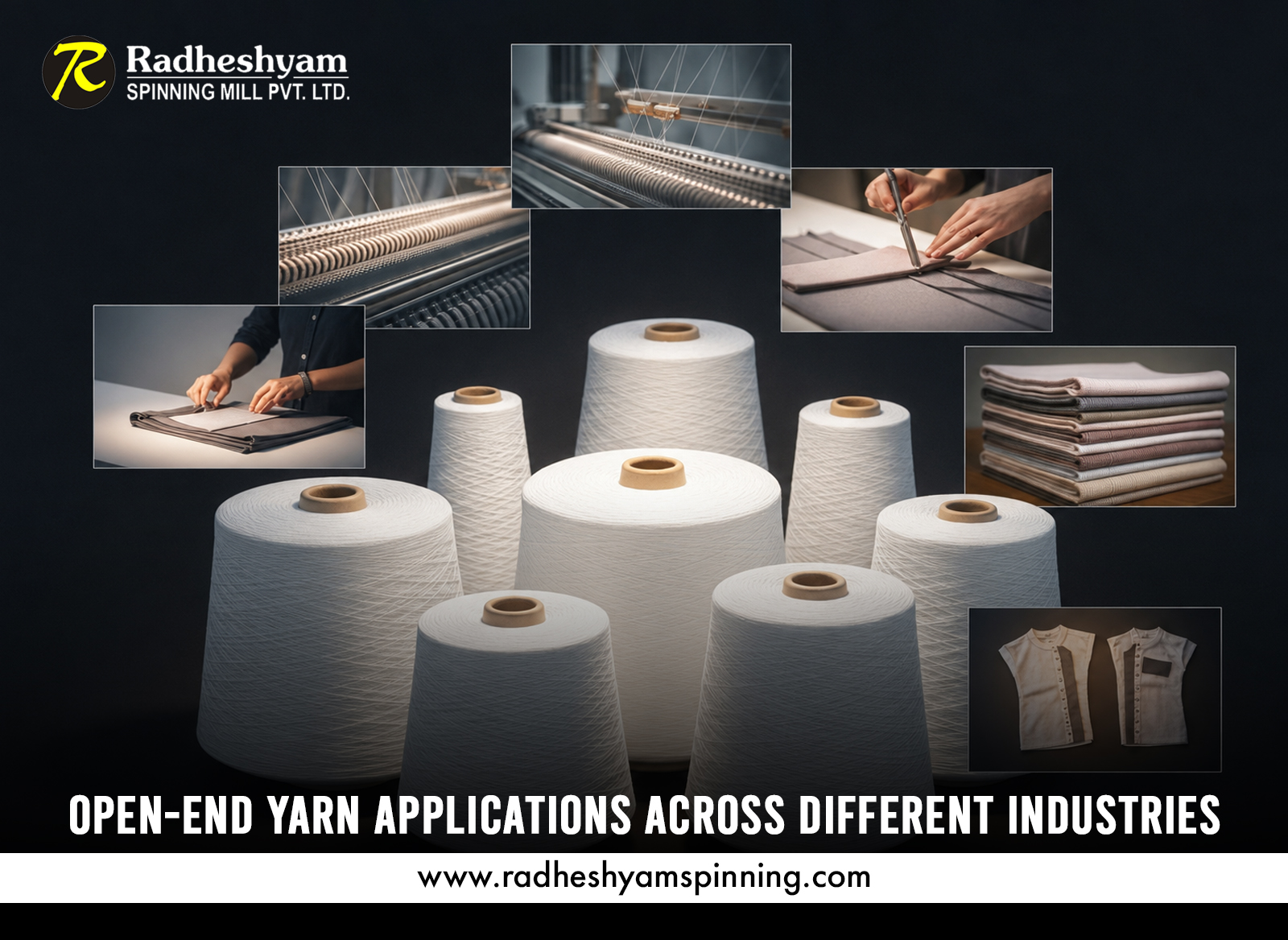
As an experienced cotton yarn manufacturer, Radheshyam Spinning Mill supplies premium-quality cotton open-end yarn designed to meet the evolving needs of the textile industry. Every stage of production is carefully monitored to ensure consistent quality, strength, and performance.
The company’s advanced manufacturing infrastructure, experienced technical team, and stringent quality management systems enable it to deliver yarn suitable for various terry towel applications. Whether customers require yarn for household towels, hospitality textiles, or industrial products, Radheshyam Spinning Mill focuses on providing dependable quality and timely delivery.
With a commitment to continuous improvement and customer satisfaction, the company has established itself as a trusted partner for textile manufacturers seeking reliable cotton yarn solutions.
How to Select the Best Yarn Supplier
Selecting the right yarn supplier is just as important as selecting the right yarn count. Before making a sourcing decision, manufacturers should consider:
- Consistent yarn quality
- Modern manufacturing facilities
- Reliable delivery schedules
- Strong quality control systems
- Technical expertise
- Ability to meet bulk production requirements
- Proven experience in cotton yarn manufacturing
A dependable supplier helps maintain production efficiency and ensures consistent finished product quality.
Conclusion
Choosing the right yarn count is one of the most important decisions in terry towel manufacturing. It directly influences absorbency, softness, durability, weaving performance, and overall customer satisfaction. By carefully matching yarn count to the intended application and working with a trusted manufacturer, textile producers can create towels that meetthe highestquality standards.
Radheshyam Spinning Mill combines advanced spinning technology, premium cotton, and rigorous quality control to deliver consistent cotton yarn for a wide range of textile applications, including terry towel manufacturing. With a strong focus on quality, reliability, and customer success, the company continues to be a preferred partner for manufacturers looking for dependable cotton yarn solutions in domestic and international markets.
Recent Posts