11 Nov, 2026
Traditional
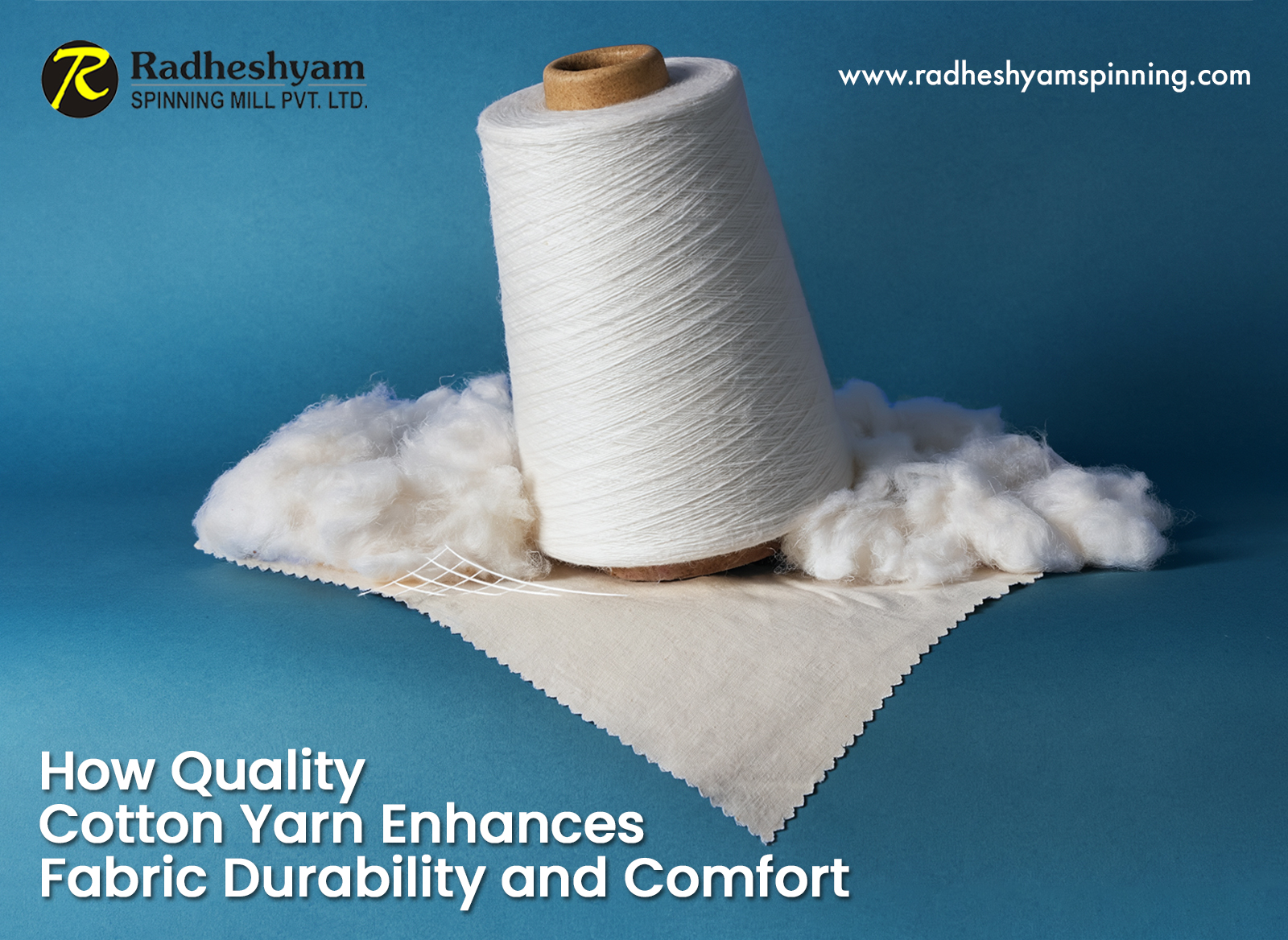
How Quality Cotton Yarn Enhances Fabric Durability and Comfort
By: Radheshyam Spinning | 26 Nov, 2026
Most people judge a shirt, a towel or a pair of jeans by touch and by how long it lasts. They rarely think about the yarn, even though the yarn decides both. A fabric can only be as strong, soft and even as the thread it is made from. Fancy finishing and expert stitching can hide small flaws, but they cannot fix a weak yarn.
This is why brands, weavers and knitters pay close attention to yarn quality before they place an order. Here is how good cotton yarn shapes the durability and comfort of finished fabric, and what to look for when you buy it.
It Starts with the Fibre
Cotton yarn is made by drawing and twisting short fibres together, so the fibre itself sets the ceiling for quality. Two properties matter most. Staple length is how long the individual fibres are. Fibre strength is how well each fibre resists breaking. Longer, stronger fibres grip one another better when twisted, which gives a yarn that resists snapping and pilling. Short, weak or immature fibres leave more loose ends along the yarn. Those ends make fabric fuzzy, rough and quick to wear out.
A spinning mill’s first job is therefore careful cotton selection and blending. A mill that treats raw material as a commodity to buy at the lowest price will struggle to deliver consistent yarn later. Radheshyam Spinning Mill Pvt. Ltd. states that its quality process, equipment and people are continuously monitored so that it can produce consistent yarn. Consistency is the real test of fibre control.
Evenness Decides How Fabric Looks and Wears
Evenness describes how uniform the thickness of a yarn is along its length. Poor evenness creates thick and thin places. Thin spots are weak points, and they are usually where a fabric tears or wears through first. In knitted fabric, uneven yarn can produce visible streaks or barré, a banded look that shows up especially in solid colours. In dyed fabric, thick and thin sections can take up dye differently, so the shade looks patchy.
Even yarn gives a smooth surface, predictable stitch formation and dependable strength. For a garment maker, that means fewer rejected rolls. For the wearer, it means a fabric that looks clean and keeps its shape wash after wash.
Twist, Strength and the Feel Against Skin
Twist is what holds the fibres together. Too little twist and the yarn is weak and prone to pilling. Too much twist and the yarn turns hard and harsh, which hurts softness and drape. Good manufacturers set twist carefully for each count and each end use. A towel yarn, for example, needs a different balance from a hosiery yarn. Towels need bulk and absorbency, and hosiery needs smoothness and stretch recovery.
Hairiness, meaning the tiny fibre ends that stick out of the yarn, also affects comfort. Some hairiness gives a warm, soft handle, but too much causes pilling and linting. Controlling it is a matter of machine settings, maintenance and testing, not luck.
Why Open-End Yarn Suits Everyday Fabrics
Radheshyam Spinning Mill focuses on open-end cotton yarn. Its stated vision is to be known for producing cotton open-end yarn of supreme quality. Open-end, or rotor-spun, yarn is made by a different method from ring-spun yarn. It tends to be bulkier and more uniform, and it works well for many practical products. Industry coverage of the mill describes its yarns for denim, knitwear, hosiery, terry towels and home textiles.
The bulk helps in several ways. In terry towels, it adds to absorbency and a full handle. In denim, it gives the characteristic textured look and good wear. In knitwear, it adds cushion and softness. Open-end yarn is generally not chosen for the finest, silkiest fabrics, where ring-spun yarn has the edge. Quality is not one fixed standard. It means the right yarn for the right product, made consistently.
How Quality Yarn Affects Durability in Real Use
Durability is tested through washing, rubbing, stretching and sunlight. Quality yarn helps in each case.
During washing, strong and evenly twisted yarn resists the mechanical stress of agitation, so fabric keeps its structure and does not thin out. Under friction, well-bound fibres release fewer loose ends, which means less pilling on sleeves, cushions and towels. When stretched, consistent yarn distributes the load evenly instead of failing at one weak spot. Shrinkage and distortion are also easier to control when yarn is uniform, because the fabric behaves the same across the whole roll.
For a brand, this shows up as fewer returns and fewer complaints about fabric that went bobbly or lost its shape. A cheaper yarn that saves a little on the purchase order can cost far more in warranty claims and lost customers.
How Quality Yarn Improves Comfort
Cotton is valued because it breathes, absorbs moisture and feels natural against skin. Those qualities only show up fully when the yarn is well made. Clean yarn with few foreign particles and neps (small tangled knots of fibre) produces a smoother fabric surface that does not irritate skin. Balanced twist keeps the fabric flexible and comfortable instead of stiff. Good absorbency, which is essential in towels, bedding and baby clothing, depends on clean, properly prepared cotton and a yarn structure that lets moisture move through it.
Comfort also depends on how well the fabric takes dye and finishing. Uniform yarn dyes more evenly and responds better to softening treatments, so the finished fabric feels the same all over.
Production Discipline Is What You Are Really Buying
Everything above comes down to process control. A mill gets steady quality through disciplined raw-material selection, well-maintained machines, standard operating methods and testing at each stage. Radheshyam Spinning Mill states that it does not compromise on quality and that it standardises how the organisation operates so customers do not face quality or delivery problems. It adds that its owners are present on the floor from the start of each process to its completion.
That level of attention matters because yarn problems are cumulative. A small variation in the mixing stage becomes a visible defect once the fabric is dyed and sewn.
What Buyers Should Ask For
If you are choosing a cotton yarn supplier, ask for test reports covering count, strength, evenness and imperfections. Request samples and run them on your own looms or knitting machines. Check whether the mill can supply bulk and split orders, which Radheshyam Spinning Mill offers. Ask for current certifications that match your market’s requirements. And compare lots over time, since one good sample does not prove consistency.
Final Thoughts
Durable, comfortable fabric is built from the yarn upward. Strong fibres, even thickness, balanced twist and controlled hairiness decide whether a fabric lasts and whether it feels good to wear. Radheshyam Spinning Mill Pvt. Ltd. has supplied cotton yarn to Indian and international customers since 2011. We would be glad to discuss your requirements and send samples. You can reach us through www.radheshyamspinning.com
Recent Posts