12 Aug, 2026
Traditional
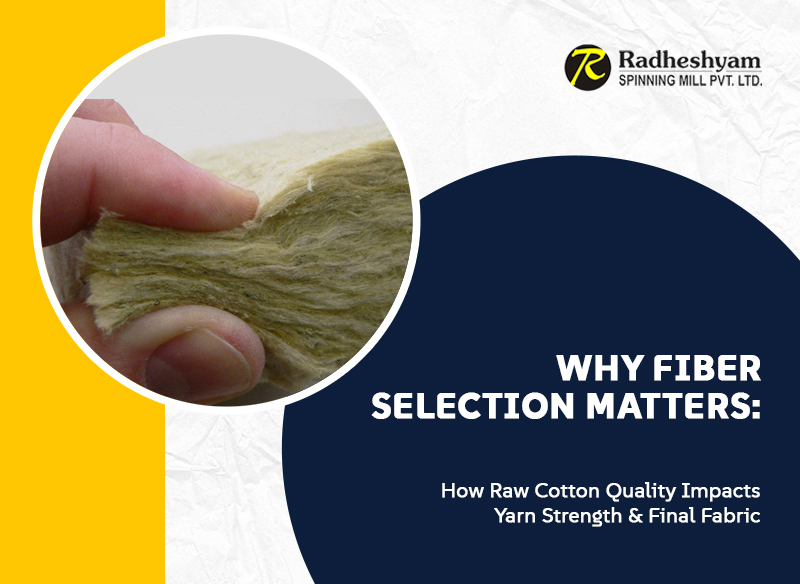
Why Fiber Selection Matters: How Raw Cotton Quality Impacts Yarn Strength & Final Fabric
By: Radheshyam Spinning | 22 Dec, 2025
In the textile world, yarn is often judged by its strength, smoothness, and consistency. But long before yarn is spun or fabric is woven, its quality is silently determined by something far more basic the quality of raw cotton fibers. At Radheshyam Spinning Mills, we treat fiber selection as the foundation of everything we produce. Choosing the right cotton isn’t just a technical step; it’s a commitment to excellence that influences every stage from spinning to the final fabric in your hands.
In this blog, let’s dive into why fiber selection matters so much, how cotton properties affect yarn strength, and why high quality raw cotton is the backbone of premium fabric.
1.The Journey Begins With the Cotton Plant
Before cotton becomes yarn, it exists as tiny fibers called lint attached to cotton seeds. These fibers vary naturally from one region, batch, or season to the next. Factors like soil, climate, harvesting methods, and ginning quality all affect how those fibers behave during spinning.
This is why mills like Radheshyam Spinning Mills carefully evaluate each lot of cotton before it enters the production line. Picking the right cotton ensures smoother spinning, fewer machine stoppages, and stronger yarn, which means better fabric for the end consumer.
2. Key Fiber Properties That Influence Yarn Strength
Every fiber has a unique fingerprint. Here are the most important cotton parameters that determine yarn quality:
a) Fiber Length (Staple Length)
Longer fibers create stronger, smoother, and less hairy yarn.
- Short fibers break easily, weakening the yarn.
- Long staple cotton, such as Sankar 6, produces yarn with excellent strength and fewer imperfections.
b) Fiber Strength
Fiber strength directly translates into yarn strength.
- Strong fibers withstand higher drafting during spinning.
- Weak fibers break frequently, increasing breaks on ring frames and lowering productivity.
c) Micronaire (Fineness + Maturity)
Micronaire tells how fine and mature a cotton fiber is.
- Very fine or immature fibers create neps, leading to uneven yarn.
- Very coarse fibers produce rough yarn with poor appearance.
A balanced micronaire range is ideal for smooth and uniform yarn.
d) Uniformity Index
Fibers of similar length blend and twist well.
Low uniformity causes thick/thin places, reducing both yarn and fabric quality.
e) Trash Content
Trash includes leaves, dust, stems, or other impurities.
Cleaner cotton means:
- Less cleaning load in blow room
- Lower waste
- Better carding performance
- Smoother yarn with fewer defects
Radheshyam prioritizes cotton lots with minimal contamination to maintain premium yarn quality.
3. Why High Quality Cotton Means High Quality Yarn
Let’s explore how fiber selection impacts yarn strength and performance.
Strong Fibers = Strong Yarn
If raw cotton contains long, mature, and strong fibers, the final yarn:
- Breaks less during spinning
- Withstands more tension
- Has a stable structure
This results in durable yarn that performs well during weaving, knitting, dyeing, and finishing.
Better Fiber = Fewer Imperfections
High quality cotton reduces:
- Neps
- Thick and thin places
- Hairiness
- Lint fly
- Drafting issues
This leads to even yarn, a must for top grade fabrics.
Greater Process Efficiency
Better raw cotton means:
- Fewer stoppages in ring frames
- Lower waste generation
- Consistent sliver and roving quality
- Higher machine speeds
The entire production line runs smoothly, enhancing output and quality.
4. How Fiber Quality Influences the Final Fabric
When yarn is strong, consistent, and smooth, the fabric naturally inherits the same strengths.
a) Softer, Uniform Fabric
Long and fine fibers produce a gentle surface feel ideal for knitted garments, innerwear, and premium apparel.
b) Higher Durability
Fabric made from strong yarn resists pilling, tearing, and breakage, giving customers lasting quality.
c) Better Dye Absorption
Uniform fibers allow dyes to penetrate evenly, creating richer and more stable colors.
d) Improved Fabric Appearance
Cleaner cotton and smoother yarn mean:
- No visible slubs
- Fewer streaks
- No patchy dyeing
- A refined, premium look
Whether it’s denim, hosiery, home textiles, or woven shirting, the final fabric quality depends heavily on the raw fiber that started the journey.
5. Radheshyam’s Approach to Fiber Selection
At Radheshyam Spinning Mills, fiber selection isn’t just a step; it’s a philosophy. We follow a meticulous evaluation process to ensure every bale meets our quality standards.
Sourcing Premium Cotton
We procure high grade varieties like Sankar 6 known for:
- Long staple length
- High strength
- Balanced micronaire
- Better spinning behavior
Advanced Testing
Every lot undergoes strict HVI (High Volume Instrument) testing, covering:
- Staple length
- Strength
- Micronaire
- Uniformity
- Color grade
- Moisture
This ensures consistency across batches.
- Perfect Blending
Cotton from different lots is blended scientifically to maintain uniform yarn characteristics throughout production.
- Focus on Cleanliness & Purity
We prioritize cotton with lower trash content, improving spinning efficiency and final fabric feel.
6. Why Fiber Selection Should Matter to Customers Too
Whether you’re a fabric manufacturer, garment brand, or exporter, fiber selection affects:
- Production efficiency
- Fabric cost
- Product reputation
- Customer satisfaction
Choosing a mill that prioritizes the right cotton, like Radheshyam ensures your final product stands out in global markets.
Conclusion: Quality Begins at the Fiber
Every yarn cone and every meter of fabric carries the story of its raw cotton fibers. When fiber quality is high, yarn becomes stronger, smoother, and more consistent and the final fabric reflects premium craftsmanship.
At Radheshyam Spinning Mills, we believe that the path to world class yarn begins with responsible and intelligent fiber selection. It is this commitment that allows us to produce yarn trusted by textile manufacturers across India and around the world.
Recent Posts